Guides — Room & Resonance
How a custom build works
One piece at a time, one of one, every time. I take a vintage piece with history and turn it into the room’s sound system — designed around the piece, never forced into a template.
1. Choose the piece
It starts with a piece — yours, or I supply the piece at an extra cost. Suitcases, briefcases, trunks, record-player cabinets, chairs, coffee tables, headboards, armoires: anything with solid structure and enough interior space can become a build. Send me a photo, rough dimensions, and where it will live, and I’ll give you a straight answer on whether it’s a good candidate and why. Not every piece should be cut into, and if yours is one of them, you’ll hear that before any money moves.
What makes a good candidate: solid wood and sound joints, enough interior volume for drivers and an amplifier, and a face worth keeping — the grain, the wear, the hardware. What doesn't work: particle board that crumbles, pieces too small to hold a driver, and anything structurally unsound. I don’t build a piece that can’t carry sound without losing its character.
I can also refinish a piece if it needs it — strip the wood, stain it, bring the finish back — before it becomes a sound system.
2. Design the sound around it
Once the piece is chosen, I plan the system around it. I put drivers where the piece allows — a suitcase gets a different layout than a cabinet, and a record-player console gets a different one again. I sit the amplifier where it can breathe. I run the wiring where it won't be seen or pinched. A sub needs air to move, so the cabinet’s own volume and openings decide how low it can go.
I build multi-speaker by design: separate drivers for different parts of the sound, an amplifier matched to them, and a sub where the piece can carry one. Some builds run a Raspberry Pi inside — for the barstool set, it drives a fold-up screen on the coffee table; for the armoire builds, a full PC and audio station live behind the doors. I add the controls the right way and keep the wires hidden from the start, not as an afterthought: the piece should look like furniture with the lid closed and work like a system with it open.
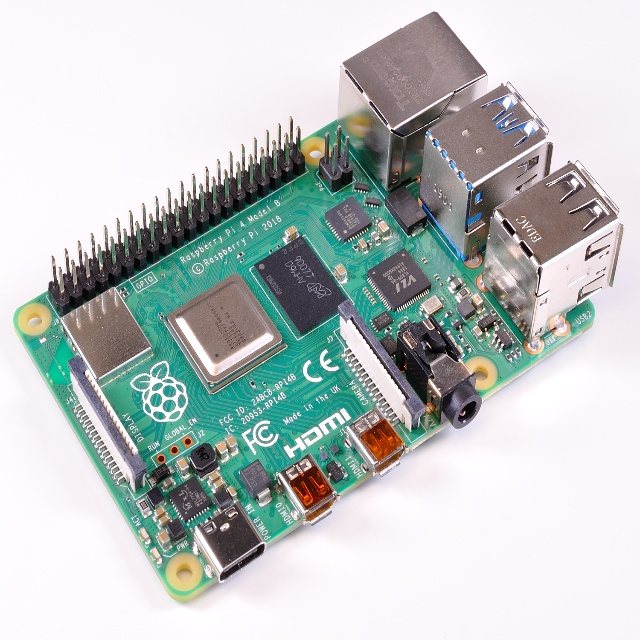
What’s a Raspberry Pi? It’s a tiny computer, about the size of a credit card. I hide one inside some builds — it runs the screen, the music, and the controls, so the piece works like a smart system without a big computer tower taking up the room.
3. Build
I start cutting after the plan is settled. I cut, brace, and seal openings so nothing rattles when the volume goes up. I mount the drivers, put the amplifier and wiring in, and the original shape and design stays whenever the build allows — the piece keeps its age and wear, and I build the sound in with intent. The finish is part of the build, not decoration at the end — and you pick the wood finish: stain, stonework, lighting, whatever the piece calls for.
I do every build by hand in my workshop on my property in La Pine, Oregon — one piece at a time. That’s slower than a factory, and that’s the point: no two builds come out alike.
4. Tune and test
A build becomes a sound system in tuning. I set levels by ear in the room the piece will live in, because a cabinet tuned in an empty workshop sounds different in a furnished room. I check the low end against the cabinet’s own resonance, balance the mids so voices don’t get lost, and run the whole thing loud, long enough to find anything loose. If something rattles, I fix it before delivery — not discovered after.
The listening test is simple: music you actually play, at the volume you’ll actually play it. A system that only sounds good on test tones isn’t finished.
5. Price and delivery
My builds start at $300, with typical custom builds running $300–$500 and larger pieces $500 and up, depending on the technology going in. I quote a firm price before any money moves — no open-ended billing. A 50% deposit starts the build, and the balance is due on delivery. One of one means exactly that: no second exists.
Pickup is local in La Pine, Oregon. Delivery around Deschutes County — Bend, Redmond, Sunriver — can be discussed. Your piece leaves tuned and tested, ready to play the day it arrives.
FAQ
Do I bring my own piece?
Bring your own piece, or I supply the piece. Send photos and rough dimensions and I'll tell you straight whether it's a good candidate and why.
How much does a build cost?
My builds start at $300. Typical builds run $300–$500, and larger pieces are $500+, depending on the technology going in. I quote a firm price before any money moves.
How does the deposit work?
50% starts the build. The balance is due on delivery.
Will my piece still look like furniture?
Yes. The wear and character stay — the sound is built in, not bolted on.
What kinds of pieces work best?
Suitcases, briefcases, trunks, record-player cabinets, chairs, coffee tables, headboards, and armoires — anything solid, with room inside and a face worth keeping.
Where are you?
I’m in La Pine, Oregon. Pickup is local; delivery can be discussed.